Modern vehicles are far more than the engine and interior they were in decades past. Their complex computational systems manage every facet of the vehicle’s form and function, and that means they need to protect against failure and external attack, while delivering high-end performance, extreme efficiency, and a low-profile design. Embedded storage holds firmware updates, diagnostic logs, device credentials, maps and AI models, and over the air update packages. With such mission critical components, only the best will do.
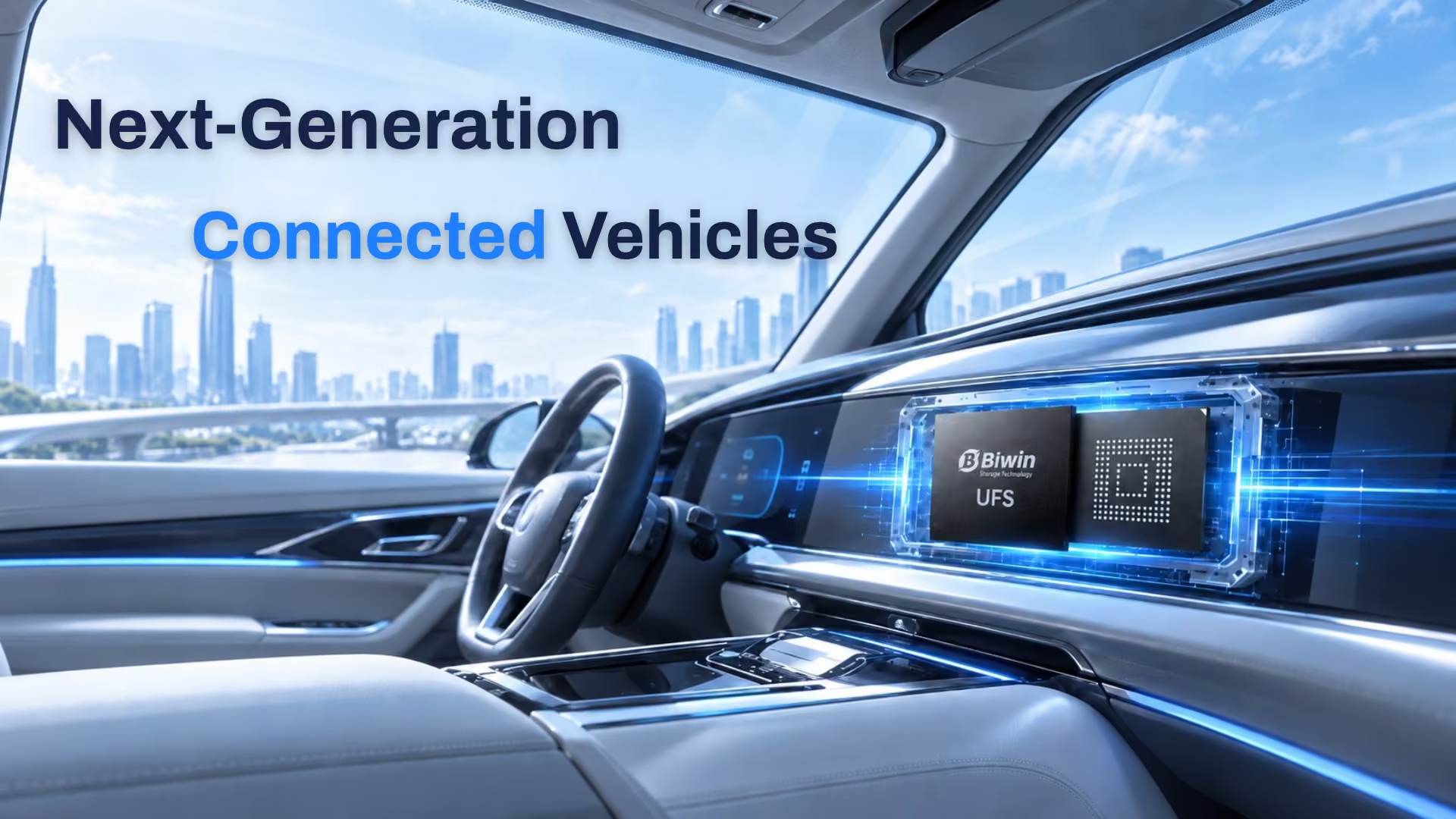
As modern vehicles have evolved to deliver a more seamlessly digital experience to their drivers and passengers, their onboard systems have become ever more powerful and inter-connected. Where the embedded storage of decades-old vehicles only had to contend with managing system logs, modern vehicles need to remain secure while offering fast read and write speeds, a durable design to avoid physical damage, and a secure environment that doesn’t let the need for always-on connectivity provide easy access to nefarious hackers.
Persistent data left inside the car after shutdown represents an increasingly attractive treasure trove of valuable information. Protecting against threats to that data, while offering the performance and design features needed for modern connected vehicles, is the challenge faced by modern embedded storage providers.
A challenge that BIWIN storage solutions are designed to meet.
Storage Matters in Vehicles Where Software is Key
In modern vehicles where storage must manage firmware, AI features, update packages and diagnostics, it’s moved from being a background component into one that’s a critical part of the vehicle’s wider architecture. Without faster, more capable storage, the connected experience that defines modern vehicle use and ownership wouldn’t be possible.
BIWIN Technology’s embedded storage solutions like the TAU208 Automotive UFS 3.1 offer high-speed connectivity with vast storage capacity, all while delivering the kind of necessary durability in-vehicle storage requires. It can operate at a wide temperature range, with full AEC-Q100 compliance.
Advanced efficiency, with its deep-sleep mode, makes sure that BIWIN storage can reduce its power consumption by up to 95%. When the vehicle is turned off, the embedded storage doesn’t impact battery life or reduce range in fully electric vehicles.
As we move towards a world of autonomous driving, too, embedded storage that can manage the large-scale maps and local AI models for advanced, low-latency decision-making will become even more critical. Collecting and storing data from cameras, LIDAR, and other sensors will be paramount. Strong embedded storage solutions from BIWIN offer the ideal solution to this problem.
When autonomous vehicles are the future, BIWIN’s storage solutions aren’t just about retaining information, they are what enable the next generation of automated vehicles.
Growing Storage Needs
The required storage capacity for embedded vehicles is expected to grow dramatically in the next half-decade, with some vehicles requiring as much as 11 TB of storage capacity by 2030, according to CounterPoint Research. That’s spread across infotainment, in-car navigation, and managing other automated systems.
As AI becomes a key component of future vehicle design, they will need high-performance, durable, and resilient embedded storage to power it without introducing the kind of latency that makes AI feel decidedly unintelligent. BIWIN Technology has been developing AI-ready storage for years, with a range of embedded solutions already appearing in smartwatches and smart glasses. BIWIN’s award-winning ePoP4X and ePoP5X are ready to serve the next generation of AI devices, whether that’s in highly portable wearables, or in future vehicle systems designed with AI at their core. Explore the benefits of ePoP5X for smart wearable AI devices in our article: BIWIN ePoP5x Powers Lighter and Smarter AI Wearables.
For today’s highly connected vehicles, the BIWIN TAU208 offers a high-performance, low-profile, high-efficiency design that fills a key need of the latest electrical vehicle design, while offering enough performance and capacity for cutting-edge software solutions.
Ready for the Future
The next generation of smart connected vehicles will be more software-defined than ever before, making storage no longer a passive background part, but a key component of what makes the modern connected vehicle experience. It underpins performance of high-end software features like cutting-edge AI– and gives designers and drivers the confidence that their data will be protected when they turn the ignition off at the end of the day.
With key embedded storage solutions built for speed, efficiency, and privacy, BIWIN is well positioned to help automakers today and tomorrow meet the growing needs of the latest connected vehicles and tomorrow’s autonomous platforms.
Built for Connected Vehicles: BIWIN TAU208 Automotive UFS 3.1
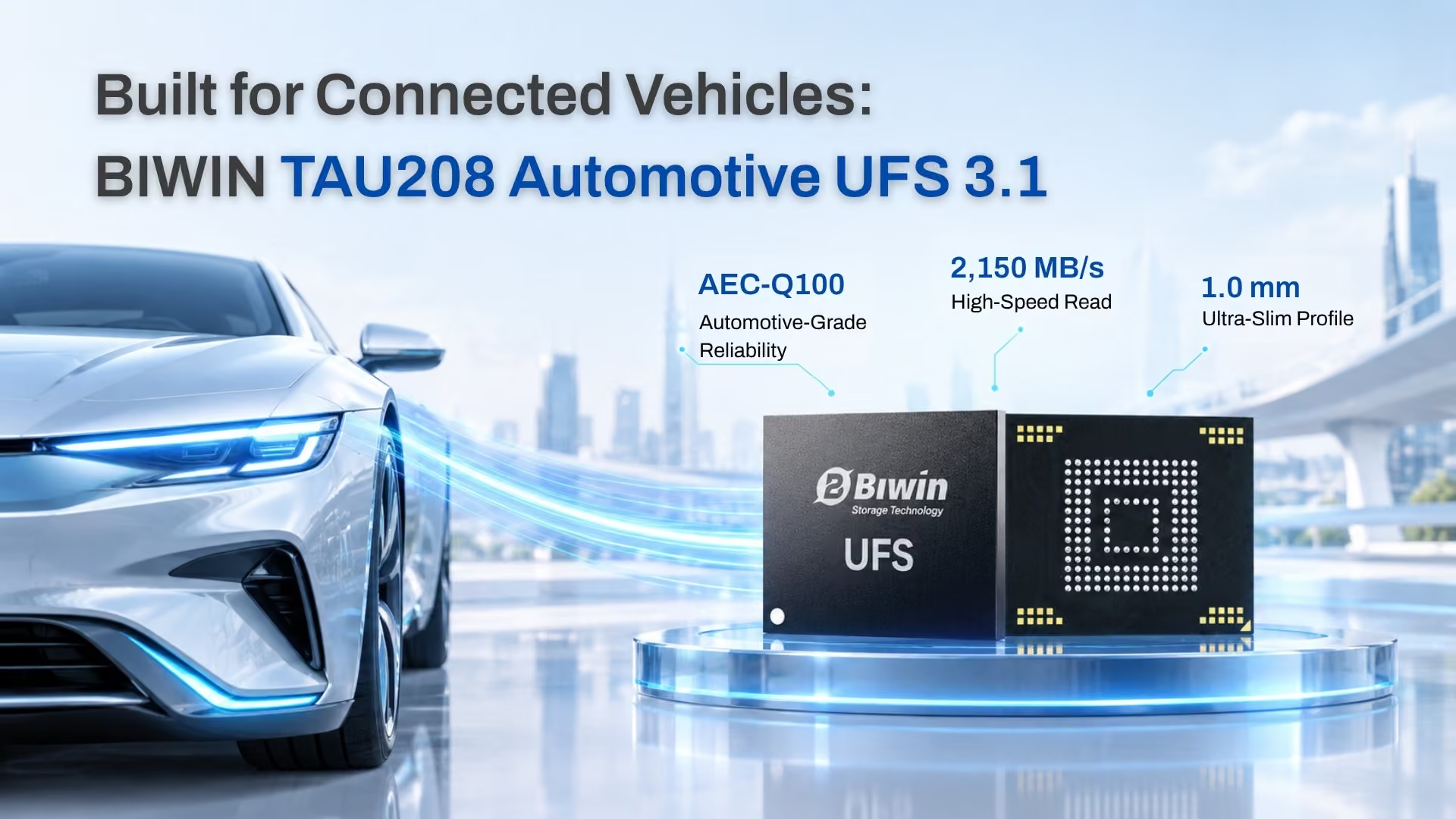
Storage errors aren’t always something a driver will notice, at least not until they start affecting the systems they rely on. In modern connected vehicles, where everything from navigation to firmware updates depends on data being available when it’s needed, that’s a problem. And with vehicles expected to remain in use for years, there’s a lot more to consider than how quickly storage can read and write information.
For a closer look at how UFS technology delivers high-speed performance, power efficiency, and reliable embedded storage, explore our article: Why Choose UFS?
The BIWIN TAU208 Automotive UFS 3.1 has a number of features for managing these kinds of problems, alongside the high-speed performance and durability already needed for automotive storage. Its LDPC and RAID technologies help protect against data errors, with Error History logging providing a record of problems that occur during operation. There’s Performance Throttling Notification, too, giving vehicle systems information about changes in storage performance. For automakers managing increasingly complex onboard systems, knowing what’s happening with the storage can be just as important as the data it holds.