Description: Low-power double data rate (LPDDR) memory is a type of random-access memory (RAM) designed for lower power consumption than standard memory. LPDDR5 is one of the latest versions of that technology, offering a combination of high performance and great efficiency.
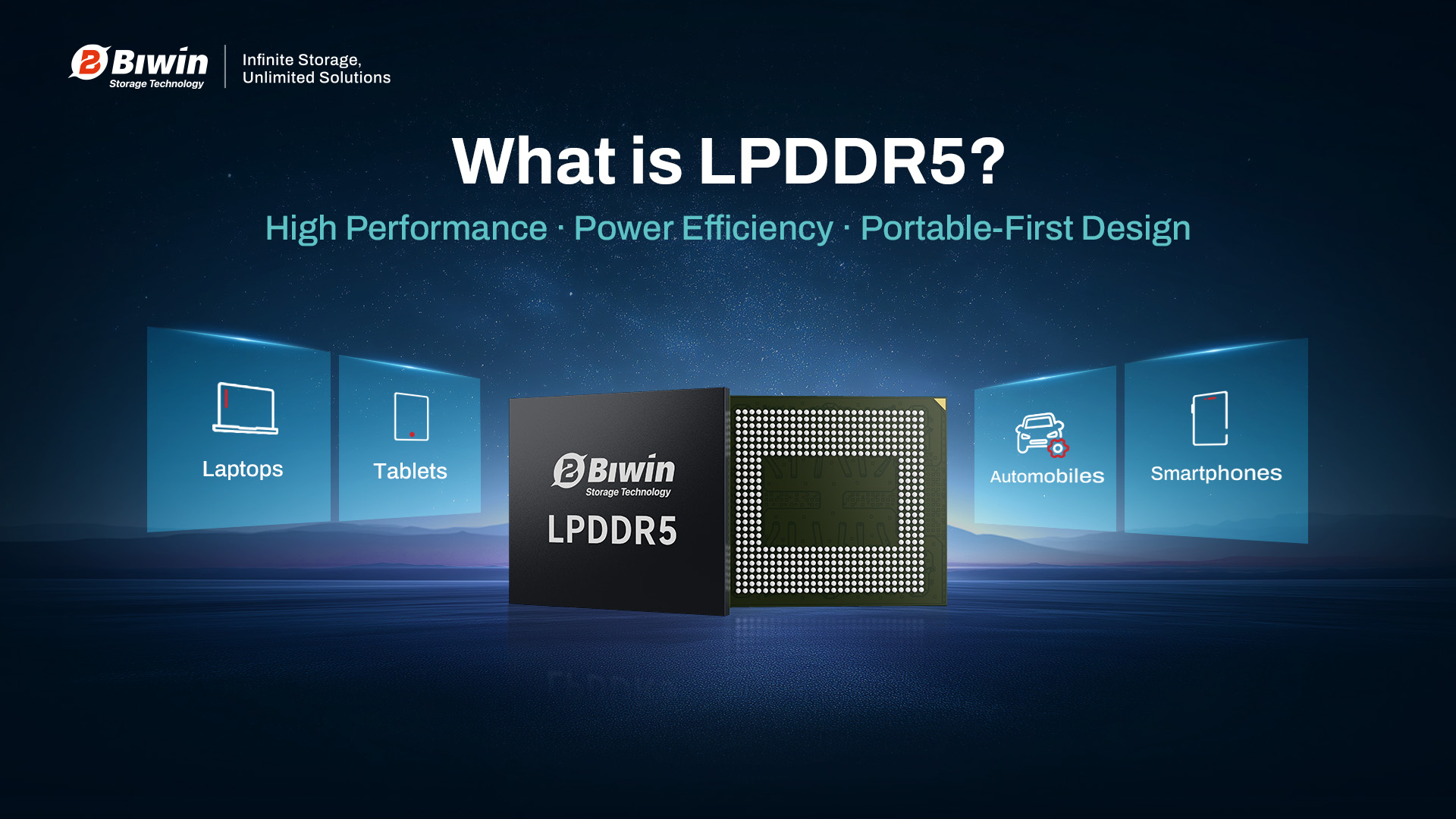
LPDDR5 memory is a fifth generation Low-Power Double Data Rate (LPDDR) RAM type used in a range of portable devices like laptops, smartphones, and tablets. It follows on from the LPDDR4 generation and its enhanced variant, LPDDR4X. Although both LPDDR and standard DRAM have different generations of memory with similar naming conventions, they are distinct from one another and the JEDEC Solid State Technology Association develops them independently.
Like all generations of low-power memory, LPDDR5 is designed to offer excellent performance without the power consumption that’s typical of the DDR5 memory you see in desktop PCs and servers. It represented a major leap over LPDDR4 and LPDDR4X modules, with increased capacity up to 16GB per stick, higher frequencies up to 6,400 Mbps, and lower working voltages for greater efficiency.
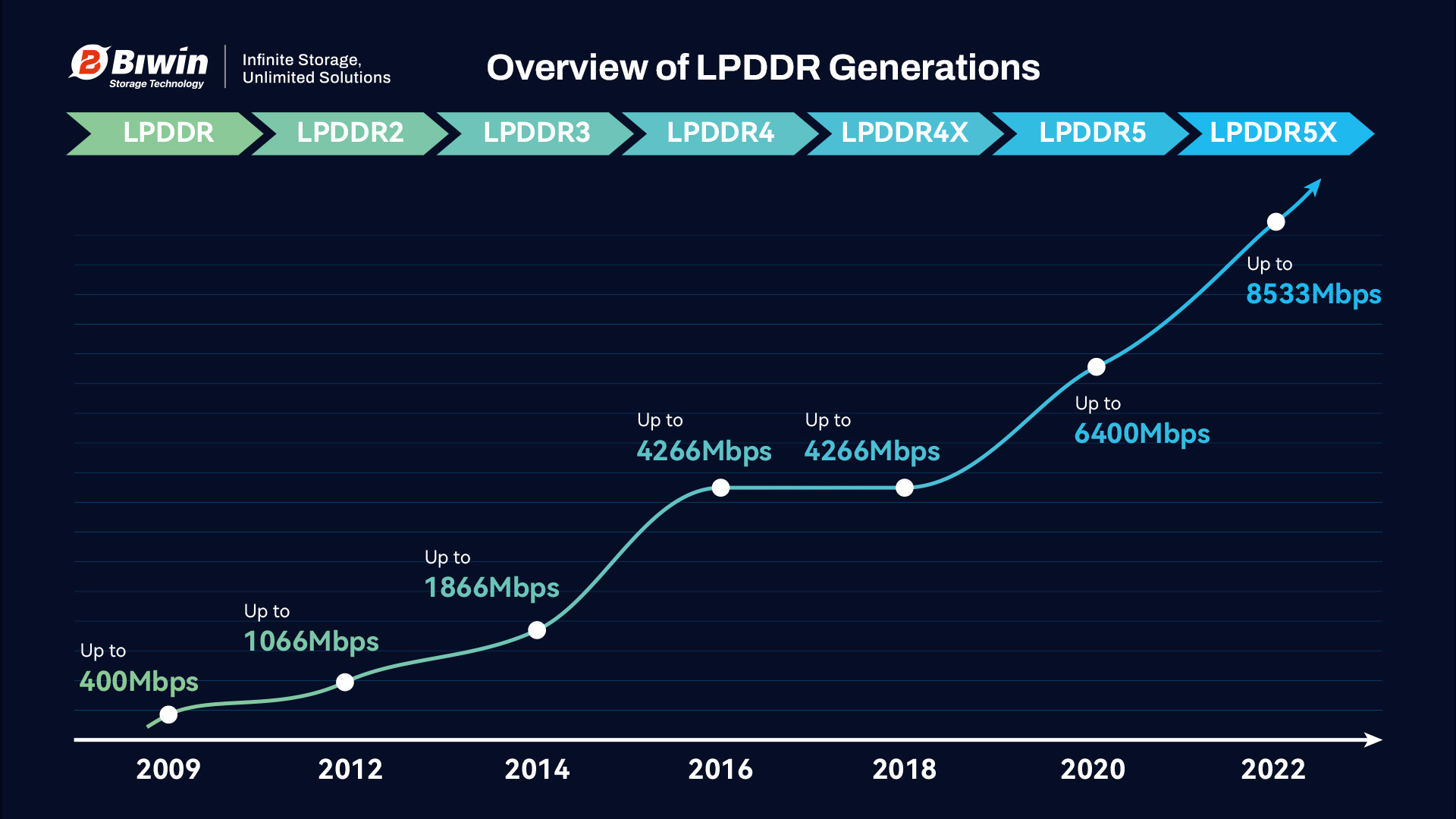
To achieve this greater performance potential, LPDDR5 uses an advanced memory architecture to enable faster data transmission while maintaining lower power use, making it a fantastic solution for high-speed portable devices where battery life is equally important.
LPDDR5 uses two uni-directional data-strobes, enhancing performance and reducing data latency. This helps to reduce power consumption too, and is part of the reason this generation of LPDDR memory is so efficient.
LPDDR5 also employs new power supply options to operate at lower power draws when higher power consumption isn’t necessary. In an improvement over LPDDR4X, LPDDR5’s offers more power modes that allow it to operate at reduced voltages more often, further minimizing power consumption. Dynamic Voltage and Frequency Scaling (DVFS) technology dynamically adjusts the operating voltage based on the operating frequency, so as to maximize performance and minimize power consumption at the same time.
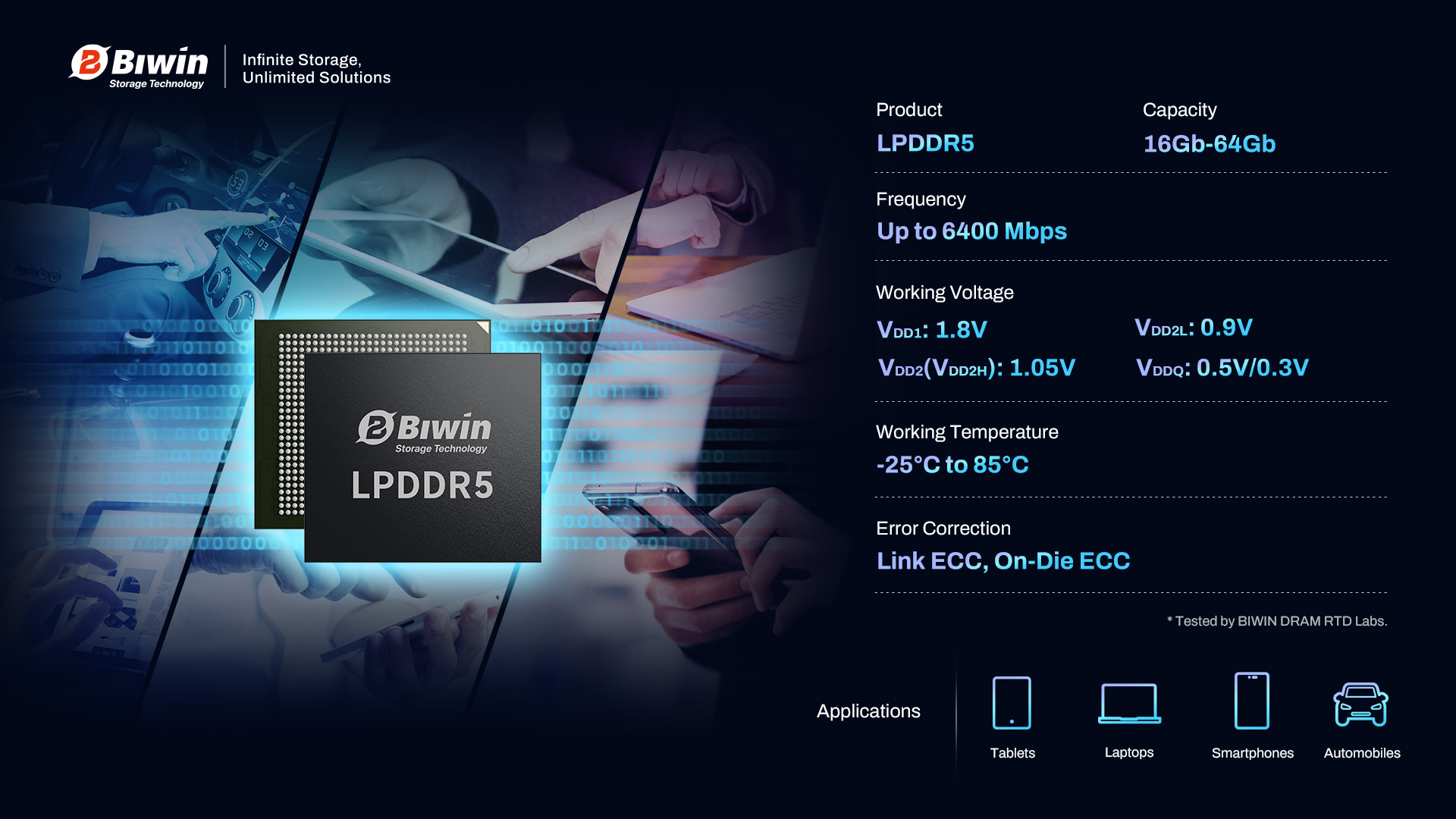
LPDDR5 introduced important power-saving technologies to low power memory, such as Data Copy and Write-X. Together they help cut power consumption of data transmission on system on chips and memory, reducing overall system power consumption and extending the battery life of the device.
The added performance of LPDDR5 memory also aids in power consumption reductions. By completing tasks faster, it can enter sleep mode more swiftly and spend longer in idle and deep-sleep states.
Next Generation LPDDR Memory
The successor to LPDDR5 memory is LPDDR5X. It offers ever greater bandwidth and lower power consumption, and Biwin offers that cutting-edge memory technology too. Where LPDDR5 has a maximum frequency of 6,400 Mbps, the Biwin LPDDR5X modules can reach 8,533 Mbps. These high-performance modules still maintain the 25% efficiency improvement over LPDDR4X, too, making them a fantastic solution for high-end smartphones, laptops, and tablets.
That’s not the end of LPDDR development, though. Biwin has also developed an LPDDR5 CAMM2 (Low Power Compression attached Memory Module 2) memory which reaches frequencies up to 8,500 Mbps, and in a thinner form-factor for use in more compact, high-performance devices.
JEDEC published the official LPDDR6 specifications in 2025, too, opening the door for even faster and more efficient memory developments in the future. The final specifications for that standard have yet to be ratified, though, so it’s unlikely to be commercially available for some time.
In the immediate future, LPDDR5 and LPDDR5X offer fantastic bandwidth and excellent efficiency for a range of modern portable devices, depending on budget and design needs. To better understand how they compare to each other and to desktop-grade memory, see our guide: LPDDR5 vs LPDDR5X: Key Differences Explained.