Description: LPDDR6 and LPDDR5 are two of the latest low-power DDR memory standards. Although LPDDR6 is still undergoing development, LPDDR5, and its overclocked and enhanced version, LPDDR5X, are found in a wide range of mobile and data center products and installations, powering the latest flagship devices and AI inferencing and training hardware.
LPDDR6 and LPDDR5 are two of the latest low-power DDR memory standards. LPDDR6 is currently under development, with early draft specifications published by JEDEC drawing a lot of interest and support from major memory manufacturers and industry partners keen to adopt this upcoming standard. LPDDR5 is a popular memory standard found in a wide range of affordable mobile devices and data center installations powering some of the latest AI workloads.
For more powerful devices and deployments, there’s also LPDDR5X, another important memory standard that offers greater performance and energy efficiencies over LPDDR5, though it can’t measure up to the future potential of LPDDR6.
As we enter the commercial era of LPDDR5/5X, JEDEC has approved LPDDR6 specifications, giving us a good idea of what it will be capable of and how the standards will compare. If you want a more detailed comparison of LPDDR5, LPDDR5X, and DDR5 memory, check out our guide: LPDDR5 vs LPDDR5X : Key Differences Explained. For your convenience, here are how the two memory types contrast.
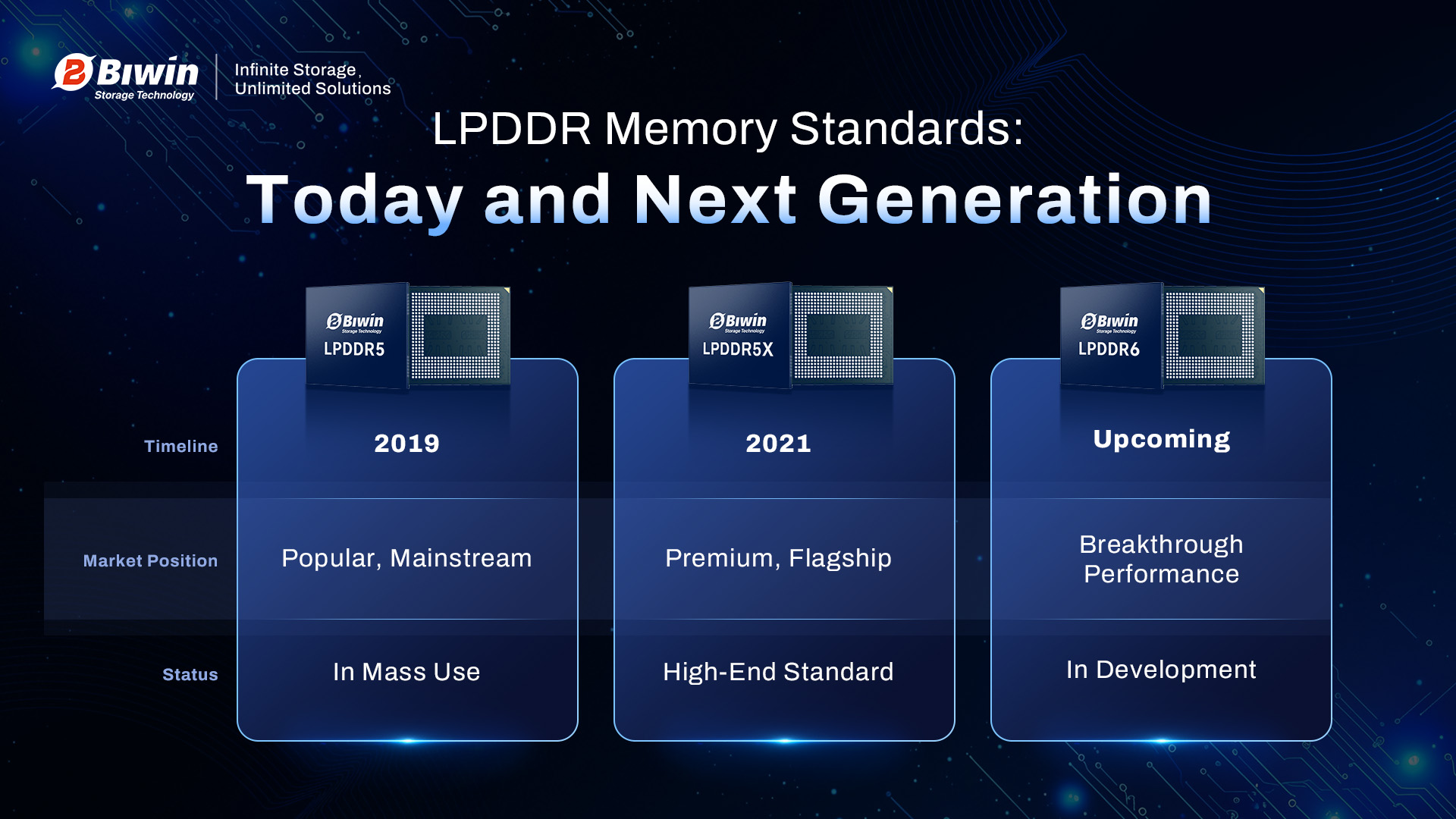
Timeline
The LPDDR5 standard was first released in 2019, though early prototypes had begun appearing the year before. LPDDR5 raised data transfer rates dramatically over previous-generation LPDDR4 and LPDDR4X standards, as well as reducing power draw. It saw mass adoption in the year that followed, and helped power the first generation of Apple silicon in its M1 range of SoCs. Later, LPDDR5 CAMM2 modules were released.
JEDEC published the specification for the LPDDR5X standard in 2021. As an enhanced form of LPDDR5, its main focus was on increasing data rate performance and improving efficiency and reliability. The first product announcements came at the end of that same year, and began to debut in 2022. In 2025, LPDDR5X is the flagship premium low-power memory standard
LPDDR6 is still under development so it’s possible that its final specifications will change when the standard is ratified. However, the early draft has received strong support from JEDEC’s memory partners, so it is unlikely to deviate dramatically in the final version. Data rates will increase dramatically over LPDDR5 and LPDDR5X, with a number of underlying architectural improvements leading to increased power efficiency and improved reliability.
Performance
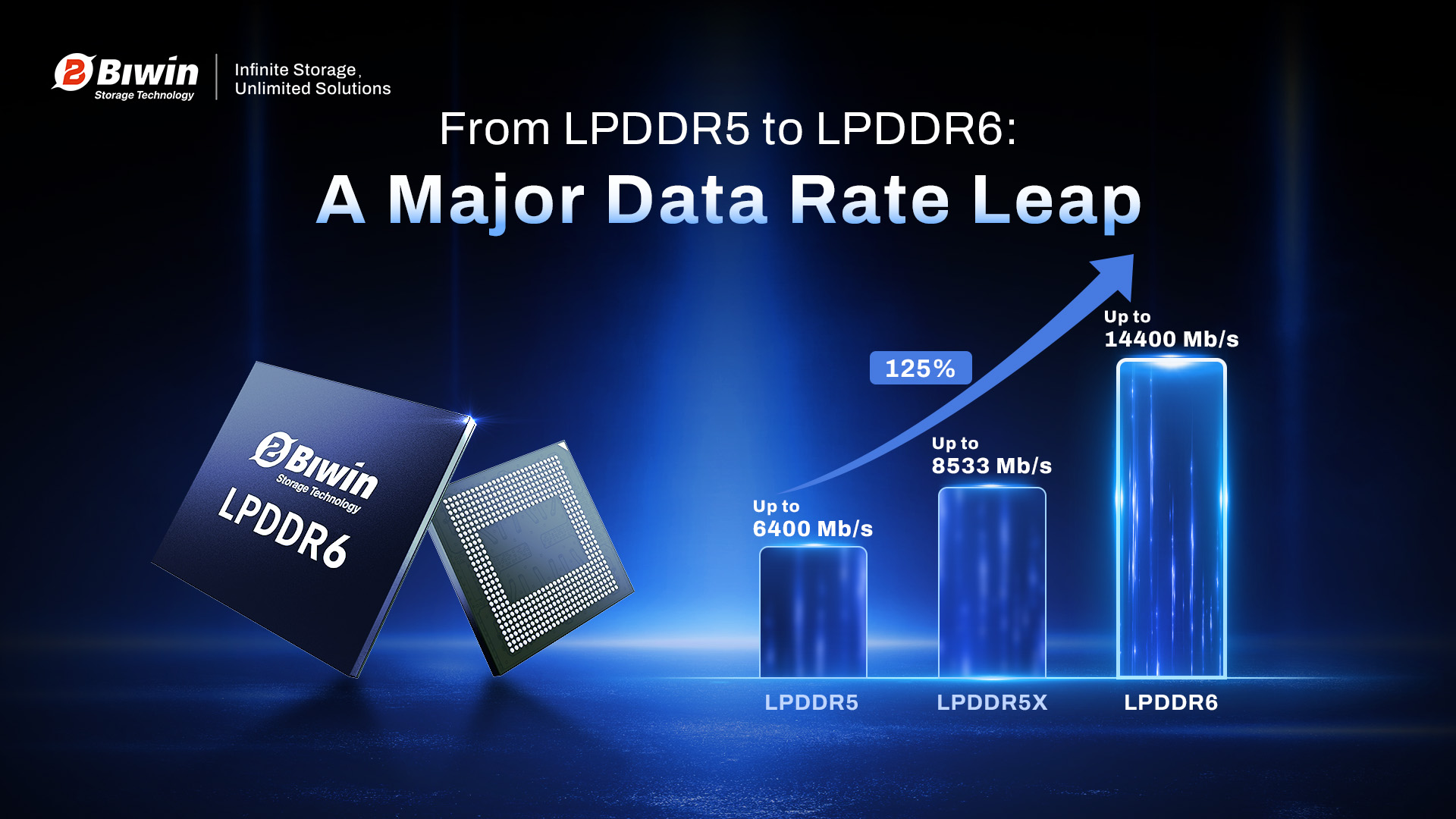
LPDDR5 and LPDDR6 are two very distinct memory standards with a number of important underlying technologies that make them leaps and bounds more capable than their predecessors. The flagship figure for both standards is their data rate, though. LPDDR5 increased data transfer speeds to 6,400 Mb/s on a 3,200 MHz clock speed. That represented a near 50% increase in overall bandwidth compared to LPDDR4X.
LPDDR5X increased data rate again to 8,533 Mb/s, but LPDDR6 is set to make a much greater leap. Its base speed starts at 10,667 Mb/s, while its peak performance could reach as high as 14,400 Mb/s; a 125% increase in data rate over LPDDR5.
Power
Efficiency in low-power DDR memory is almost as important as performance – in AI workloads, lower power draw means more economic performance from the systems. LPDDR5 reduced typical VDD2 voltages to 1.05v, down from 1.1v on LPDDR4X. It also introduced a second possible state for VDD2 voltage at just 0.9. I/O power (VDDQ) was also reduced to 0.5v (down from 0.6v on LPDDR4X), with the possibility to drop to just 0.3v in certain scenarios.
JEDEC hasn’t released official voltage specifications for LPDDR6 just yet, but has suggested its VDD2 voltages would be lower during low-frequency operation. It will also employ dynamic frequency and voltage scaling in low-activity modes to further reduce power consumption, especially in idle states.