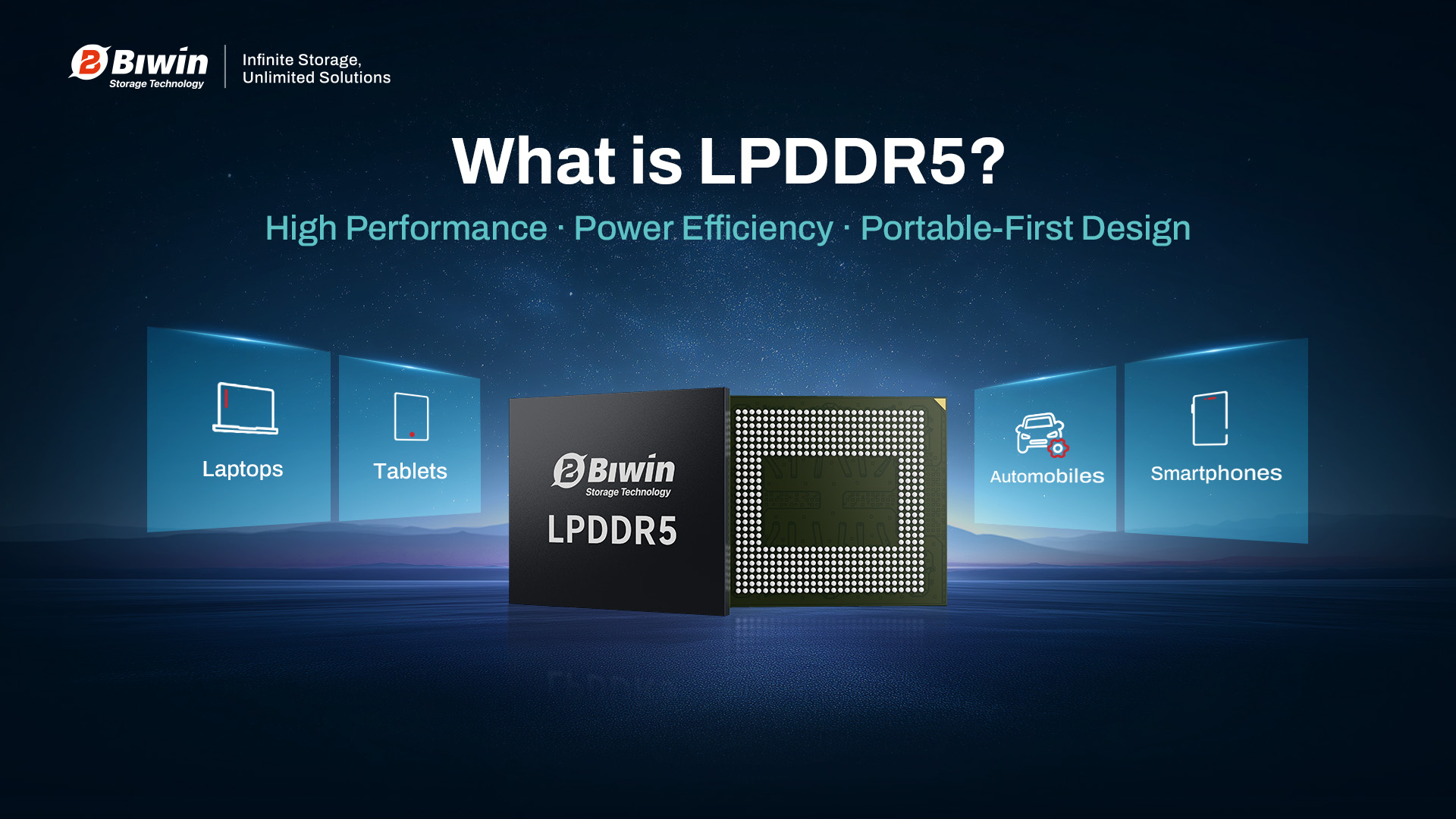
Description: LPDDR5 and LPDDR5X are two of the latest generations of low-powered memory used in a range of portable smart devices, including laptops, tablets, smartphones, and IoT devices. LPDDR5X is the “enhanced,” version, with greater performance and energy savings, but LPDDR5 still offers an excellent blend of power and efficiency, with some notable cost savings.
Low powered DDR memory is an important component of what makes modern portable devices so performative. It brings much of the performance potential of desktop random access memory, but with enhanced features to minimize power draw and maximize battery life. LPDDR5 made huge strides in this space, offering much greater bandwidth than previous generations like LPDDR4 and LPDDR4X, but at the same time introducing new power states and other efficiency savings to extend device uptime between charges.
LPDDR5X is the enhanced version of LPDDR5, offering greater data rates up to 8,533 Mbps (a 33% improvement over the standard LPDDR5) and up to 25% lower power consumption, helping improve overall device efficiency and battery life. If you want a clearer understanding of how LPDDR5 works and why LPDDR5X builds upon it, check out our guide: What Is LPDDR5? Everything You Need to Know. Designed for flagship devices in a range of product lines, Biwin LPDDR5X memory utilizes advanced clocking, improved signal integrity, and tightly optimized timings to deliver reliable, stable data transmission in a variety of settings and devices.
Both LPDDR5 and LPDDR5X offer significant power savings over standard DDR memory, up to 20-30% in some instances. Using either improves device efficiency over the alternatives, and helps reduce the physical footprint of the device. For flagship devices, LPDDR5X offers the best blend of performance and efficiency. Where cost savings are just as important, LPDDR5 fits a unique niche in delivering greater performance and efficiency than its predecessors, and significantly greater power savings over traditional DDR memory, whilst still costing less than the latest LPDDR5X modules.
LPDDR5X is built on 1bnm process technology, helping to enable much of the important power savings with this generation of memory. As more devices introduce generative AI capabilities, where high performance and high-efficiency memory can make a real different to device capabilities, being able to rely on a stable, high-speed, low-power memory standard like Biwin’s LPDDR5X makes device development more streamlined and cost effective.
Low power memory in the data center
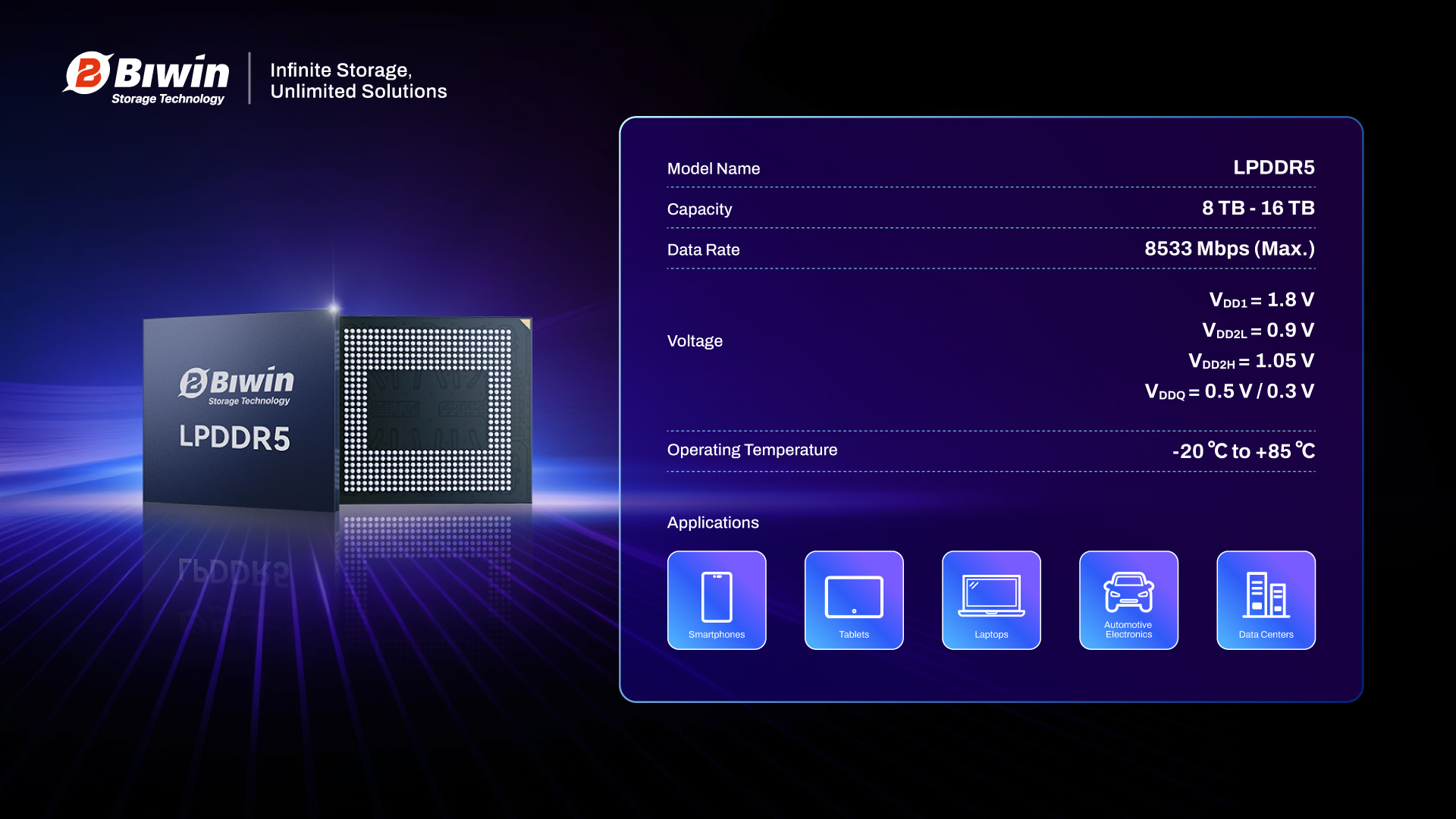
Where LPDDR memory has traditionally been used almost exclusively in portable devices, today it’s seeing much greater use in data center settings where the broad range of compute tasks can benefit from the high performance and low-power use of LPDDR5 and LPDDR5X memory.
The compact design of both memory standards make them an excellent choice for building out data center compute systems with varied workloads, or when cooling potential or physical server space is limited. These high-density configurations can be a perfect fit for edge-servers and rack-based hardware – particularly when it comes to AI workloads.
So much of modern data center design is cetralized around maximizing computecomputer throughput while minimizing power draw to increase profit margins from that data center. Using LPDDR5 and LPDDR5X in place of more traditional DDR memory can help maximize efficiency for a more profitable enterprise.
In those cases, the higher performance and lower power draw of LPDDR5X makes it the ideal candidate, particularly when compared with standard DDR5 memory which has much higher power draw and takes up more physical space per stick.
BIWIN LPDDR5X: High-Speed, Power-Efficient Memory for Flagship Devices
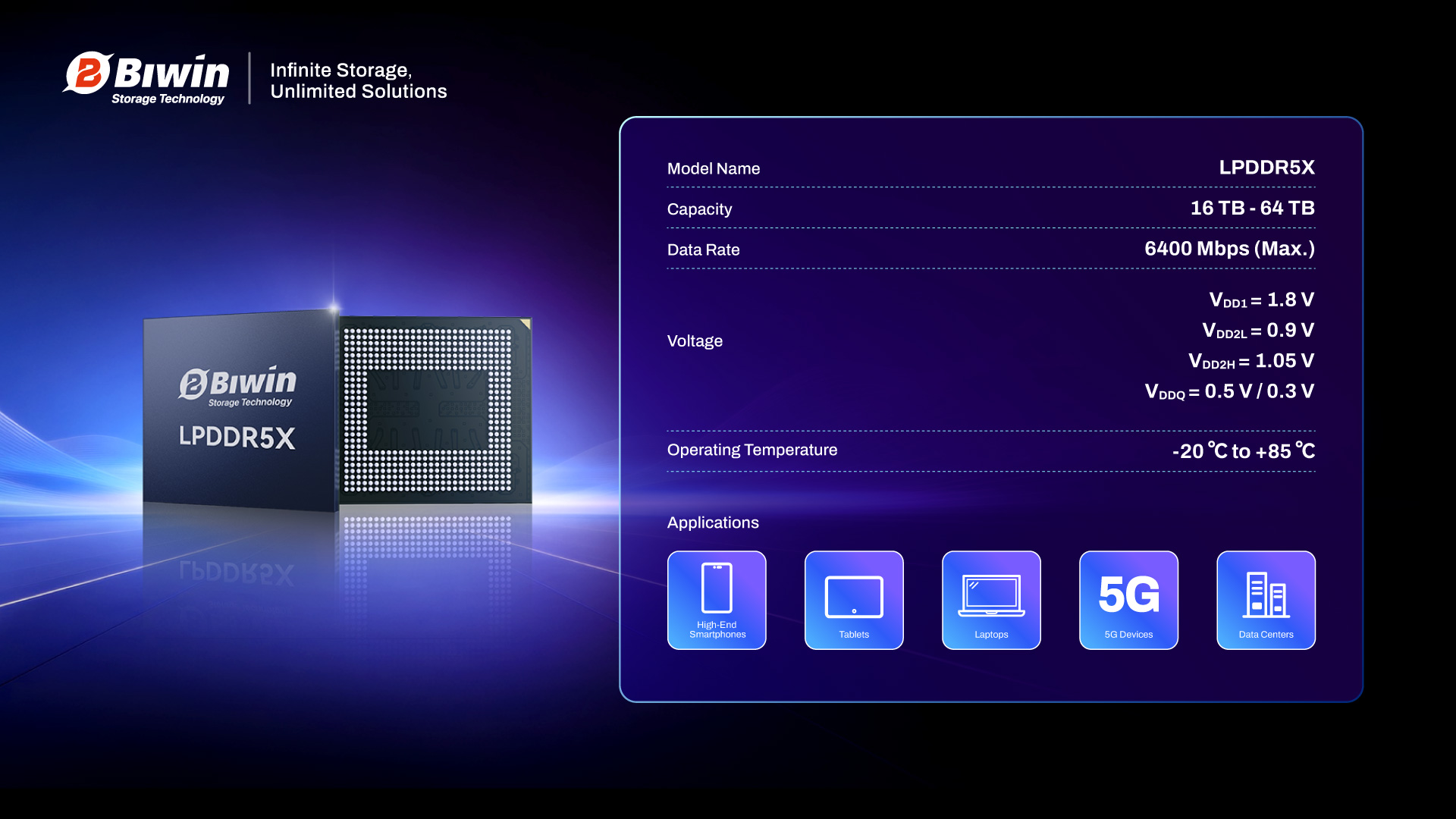
BIWIN LPDDR5X is built on advanced 1α/1b nm process technology, delivering data rates of up to 8533 Mbps and transfer bandwidth reaching 68 GB/s, while reducing power consumption by up to 25% compared to LPDDR4X.
With up to 16 GB capacity, the LPDDR5X handles complex, data-intensive tasks while maintaining a compact 12.4 x 8.2 mm form factor, easy for integration into space-constrained designs. Its compact FBGA packaging and multi-die stacking make it especially well-suited for ultra-thin smartphones, laptops, tablets, 5G devices, and AI-driven platforms, where space efficiency and thermal control are critical.f